
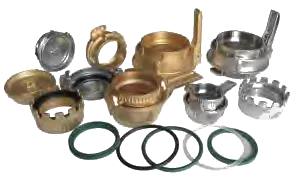
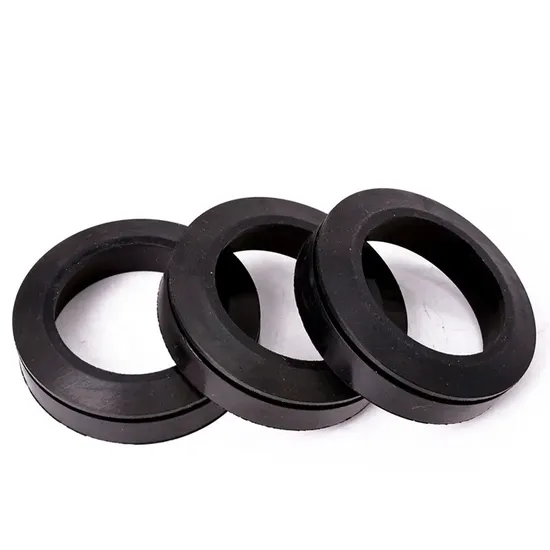
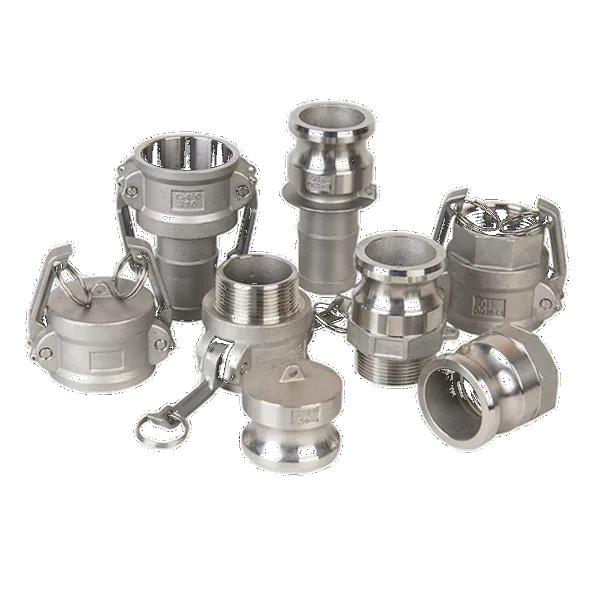
A camlock coupling is only as reliable as the gasket that seals the connection. Buyers often compare stainless steel, aluminum, polypropylene or nylon camlocks but forget to define the gasket material, even though the gasket touches the media directly.
This guide helps purchasing teams choose an RFQ direction for EPDM, NBR, FKM, PTFE and silicone camlock gaskets before asking for price.
Short answer: choose camlock gasket material by media, temperature, cleaning chemicals, pressure and coupling material. Do not use the same gasket for water, fuel, food, solvent and chemical transfer without compatibility review.
Camlock gasket material comparison
| Material | Common Direction | Buyer Notes |
|---|---|---|
| EPDM | Water, some mild chemicals, outdoor service. | Usually not selected for petroleum oils and fuels. |
| NBR | Oil and fuel transfer in many general applications. | Check temperature and additive exposure. |
| FKM | Higher heat, fuel and chemical resistance. | Higher cost, useful when standard rubber fails. |
| PTFE | Chemical compatibility and low contamination needs. | Less elastic than rubber; confirm seating and coupling fit. |
| Silicone | Food, temperature flexibility and selected clean applications. | Confirm tear strength and media compatibility. |
Match gasket to transferred media
The most important RFQ detail is not the coupling type. It is the transferred media. Water, fertilizer, diesel, edible oil, solvent and cleaning chemical each create different risks. If the media changes by season or customer, the gasket specification should also be reviewed.
- For water or weather exposure, EPDM is often reviewed first.
- For oil or fuel, NBR or FKM may be considered.
- For aggressive chemicals, PTFE or FKM may be discussed.
- For food or beverage handling, material grade and cleaning conditions must be defined.
RFQ details for camlock gaskets
| Detail | What to Send |
|---|---|
| Coupling size | Nominal size and actual gasket dimensions if available. |
| Coupling material | SS304, SS316, aluminum, PP, nylon or brass. |
| Media | Fluid name, concentration, temperature and cleaning chemical. |
| Application | Tanker hose, industrial transfer, agriculture, fire hose, food line or chemical handling. |
| Quantity | Replacement gasket quantity and coupling quantity if supplied together. |
Common sourcing mistakes
The most common mistake is asking for standard gasket without explaining media. Another is buying couplings from one supplier and replacement gaskets from another without confirming seat dimensions. For repeat customers, MCHEN can quote couplings and gaskets together so the buyer receives matched components.
How this connects to camlock coupling selection
If you are still comparing Type A, B, C, D, E, F, DC and DP, start with the camlock coupling type and size guide. If the coupling material is fixed, visit stainless steel camlock couplings or all hose couplings.
FAQ
What is the best camlock gasket material?
There is no universal best material. The best choice depends on fluid, temperature, cleaning chemicals, coupling material and service pressure.
Can MCHEN supply camlock couplings and gaskets together?
Yes. MCHEN can supply camlock couplings with matched replacement gaskets for industrial hose, tanker and fluid transfer buyers.
Can PTFE replace rubber in every camlock?
No. PTFE has strong chemical resistance but less elasticity. Seating and coupling fit must be checked.