
Rubber hardness is one of the most important details in a custom rubber RFQ. It affects sealing pressure, compression, recovery, vibration isolation, load support and the final feel of the part. If hardness is missing, the factory has to guess or ask for more information, which slows down the quote.
What Shore A hardness means
Shore A is a common hardness scale for flexible rubber and elastomer parts. A lower Shore A value usually feels softer and compresses more easily. A higher Shore A value usually feels firmer and supports more load, but it may seal or isolate vibration differently.
Typical hardness direction by application
| Application | Common hardness direction | Why it matters | RFQ details to send |
|---|---|---|---|
| Flat rubber gasket | Medium range, based on compression and sealing pressure | Too hard may not seal; too soft may deform or squeeze out. | OD, ID, thickness, pressure, medium, flange condition |
| O-ring or profile seal | Depends on groove, squeeze and movement | Hardness affects compression, rebound and installation force. | Groove drawing, cross-section, medium, temperature, quantity |
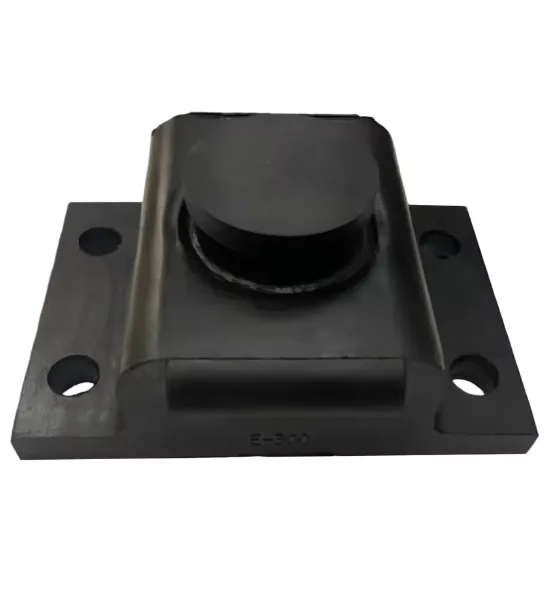
| Rubber vibration isolator | Chosen by load and deflection target | Too soft can bottom out; too hard can transmit vibration. | Load, direction, mounting hole, machine type, sample photo |
| Rubber pad or bumper | Medium to firm, depending on impact and wear | Needs enough support while absorbing shock. | Impact condition, contact surface, size, thickness, environment |
| Dust cover or protective cap | Soft to medium, based on fit and removal force | Needs flexibility for installation and enough grip to stay in place. | Connector size, wall thickness, outdoor exposure, color, quantity |
How hardness affects sealing and vibration
For gaskets and seals
Hardness affects how much the gasket compresses under bolt load or assembly pressure. If the rubber is too hard, it may not conform to surface irregularities. If it is too soft, it may over-compress, extrude or lose shape after repeated use.
For rubber mounts and isolators
Hardness interacts with load and part shape. A soft rubber mount can isolate vibration, but it must still support the machine. A hard mount may carry more load, but it can transfer more vibration into the frame.
For molded rubber parts
Hardness also affects demolding, edge quality, flash control, flexibility and user handling. This is why molded rubber part RFQs should include both performance expectations and dimensional requirements.
What to do if hardness is unknown
Many buyers do not know the original Shore A hardness. That is acceptable if the RFQ includes enough application context. MCHEN can review a practical direction when the buyer provides:
- Drawing, sample photo or worn part photo
- Part size, thickness, mounting hole and critical dimensions
- Material target such as NBR, EPDM, silicone, FKM or PU, if known
- Working media such as oil, water, fuel, air, steam or chemicals
- Temperature range, outdoor exposure, load, vibration or impact condition
- Sample quantity, production quantity, annual demand and packing requirement
Hardness and material should be reviewed together
The same Shore A number can behave differently across rubber compounds. NBR, EPDM, silicone, FKM and PU have different resistance, recovery, abrasion and cost profiles. A useful RFQ should not only say "70 Shore A rubber"; it should explain what the rubber touches and what problem it must solve.