
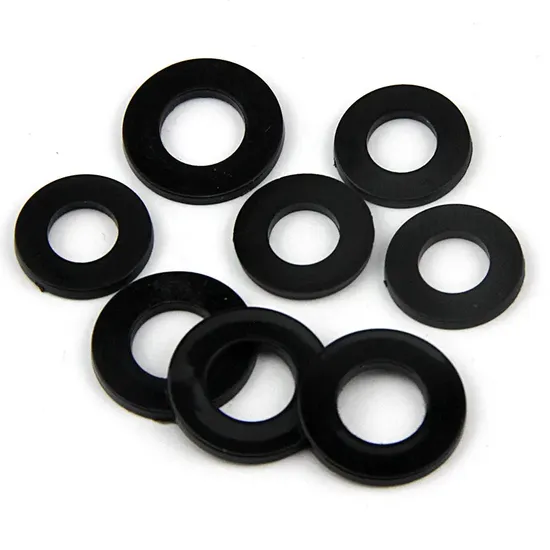
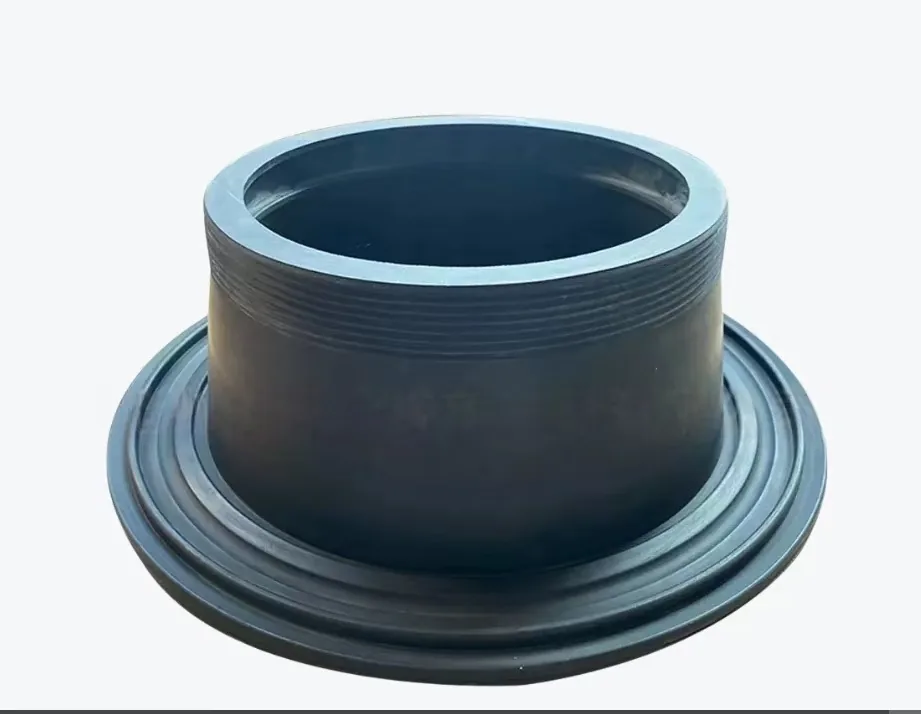
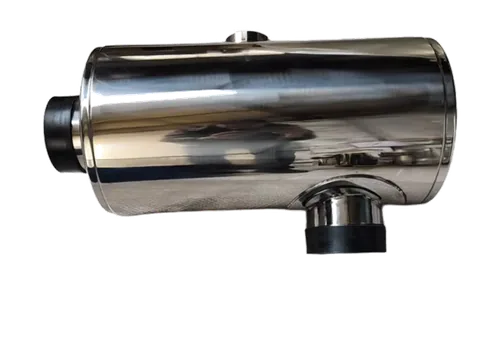
Most truck exhaust gasket RFQs fail for the same reason: the buyer sends only a photo and asks for a price. A useful quote needs enough detail to understand the joint, not just the gasket. The pipe, clamp, flange, heat level and failure marks all affect the final part.
This guide is written for importers, fleet maintenance buyers, aftermarket suppliers and repair distributors who need to turn a leaking truck exhaust joint into a clear custom gasket inquiry.
Best result: send the gasket sample, pipe size, joint photos, thickness, width, temperature range and annual quantity together. That gives the supplier enough context to quote material, tooling and inspection steps.
1. Identify the joint type first
Before measuring the gasket, identify where it sits. A two-bolt flange gasket, V-band gasket and donut gasket are not specified the same way. If the joint type is unclear, take photos from the side and front before removing the old part.
- V-band or clamp joint near turbo, downpipe or aftertreatment system.
- Two-bolt or three-bolt flange joint around muffler, manifold or pipe sections.
- Donut or tapered gasket where the pipe seats into a curved sealing area.
- Custom pipe support or damping gasket in a lower-temperature area.
2. Measure the pipe and gasket dimensions
For most RFQs, start with the pipe outside diameter because the gasket must match the joint hardware. Then measure the old gasket if it is still usable. If it is burned or broken, use the mating pipe and flange dimensions as the reference.
| Measurement | How to Check | RFQ Note |
|---|---|---|
| Pipe OD | Measure the outside diameter of the pipe where the gasket seats. | Use calipers where possible; note inch or metric units clearly. |
| Gasket ID | Measure the inner opening of the gasket. | Compare with pipe OD to confirm clearance and seating. |
| Gasket OD | Measure the largest outside diameter. | Needed for flange contact area or clamp seating. |
| Width | Measure the sealing band width across the gasket face. | Important for V-band, clamp and flange contact area. |
| Thickness | Measure both free thickness and compressed marks if visible. | Wrong thickness can prevent clamp closure or leave a leak path. |
| Bolt spacing | For flange gaskets, measure center-to-center bolt holes. | Include hole diameter and number of bolts. |
3. Photograph the problem, not just the product
Repair communities often discuss soot around clamps, ticking sounds on startup, and leaks that continue after replacement. Those symptoms are useful because they show where the joint is failing. Photos can reveal things dimensions cannot.
- Photo of the old gasket front and back.
- Photo of soot marks or burned areas.
- Photo of the clamp or flange by itself.
- Photo of the installed joint before removal.
- Close-up of any warped flange, corrosion or damaged sealing land.
4. Describe temperature and installation position
A gasket near the turbo or manifold sees a very different environment from a gasket near a muffler outlet. Do not choose material by appearance alone. A black gasket, metal-reinforced gasket and rubber damping part may look simple in a photo but work in very different temperature zones.
If the material is unknown, describe the failure: burned edge, cracked body, crushed profile, loose clamp, repeated soot line or noise after heat cycle. Failure mode is often enough to guide the next question.
5. Send a sample when the drawing is missing
A drawing is helpful, but many replacement projects start from a sample. If there is no drawing, send the cleanest available sample and keep all broken pieces. The supplier may still request missing dimensions, but a sample helps confirm profile, thickness and seating marks.
For custom production, include expected quantity. Tooling decisions are different for ten pieces, two hundred pieces and ongoing annual orders.
Copy-ready RFQ template
We need a custom truck exhaust gasket for [joint position]. The joint type is [V-band / flange / clamp / donut / custom]. Pipe OD is [size]. Gasket ID/OD/width/thickness are [sizes]. Working temperature is [range or unknown]. Failure symptom is [soot / noise / burned gasket / leak after replacement]. Annual quantity is [quantity]. Photos and/or samples are available.
What MCHEN needs to quote faster
MCHEN can review truck exhaust gasket samples, drawings and photos for custom sealing projects. The fastest quote path is to send a complete RFQ pack first, then confirm material and production details after the application is understood.
For product details, see the custom truck exhaust gaskets page. For direct quotation, use the truck exhaust gasket quote form.
FAQ
Can I request a quote with only photos?
You can start with photos, but dimensions are still needed before a reliable quote. At minimum, provide pipe OD, gasket ID/OD, width, thickness and photos of the joint.
What if the gasket is too damaged to measure?
Measure the pipe, flange or clamp hardware and send all remaining gasket pieces. The mating parts often explain the original gasket profile.
Should I measure in inches or millimeters?
Either is fine if the unit is clear. Do not mix units in one drawing unless each value is labeled.
Do I need to know the material before requesting a quote?
No. If material is unknown, describe the application position, temperature and failure mode. MCHEN can review options after checking the joint condition.