
Truck exhaust gasket problems get discussed again and again because they create symptoms that drivers and mechanics notice quickly: black soot, hot exhaust escaping near the clamp, poor aftertreatment performance, failed inspection, noise at startup, or a leak that remains even after a new gasket is installed.
Across Reddit discussions in diesel and mechanic communities, the repeated pattern is not simply "the gasket is bad." The real problem is usually a combination of gasket width, clamp profile, flange flatness, pipe alignment, torque process, heat cycling and vibration.
Short answer: a truck exhaust gasket should be specified as part of a sealing system. The gasket, clamp, flange, pipe alignment and surface condition must match, or a new gasket can still leak.
Why truck exhaust gasket leaks are so common
A truck exhaust joint works in a harsh environment. It sees high temperature, thermal expansion, vibration, road shock and repeated maintenance. If one part of the joint is wrong, the gasket may burn, crush unevenly, leave a gap or fail to seat.
Reddit repair threads frequently mention the same field clues: soot marks, a missing or burned gasket, a clamp that is not seated, old gasket material left behind, the wrong clamp V profile, and flange surfaces that are no longer flat.
Most discussed failure points
| Failure Point | What Buyers Should Check | RFQ Detail to Include |
|---|---|---|
| Wrong gasket width | A narrow gasket may not cover the sealing land; a too-wide gasket may not seat inside the clamp or flange. | Inside diameter, outside diameter, width and compressed thickness. |
| Wrong clamp profile | V-band and exhaust clamps must match the flange shape. A clamp cannot force a badly mismatched joint closed. | Clamp type, flange angle, pipe diameter and photos of the joint. |
| Dirty mating surface | Old gasket material, soot or corrosion can create a leak path under a new gasket. | Surface finish requirement and cleaning process before assembly. |
| Warped flange | A gasket cannot always compensate for flange distortion or uneven bolt loading. | Flatness tolerance or sample inspection request. |
| Heat and vibration | High temperature and continuous vibration can harden, burn or loosen poorly selected gasket material. | Temperature range, installation position and engine/exhaust application. |
How to specify a truck exhaust gasket
For sourcing teams, "truck exhaust gasket" is not enough information. A useful RFQ should define the application and sealing geometry so the supplier can recommend the right material and tooling method.
- Application position: manifold, turbo outlet, downpipe, DOC/DPF inlet, muffler flange, flex pipe or tailpipe joint.
- Joint type: two-bolt flange, three-bolt flange, V-band clamp, band clamp, donut gasket or custom profile.
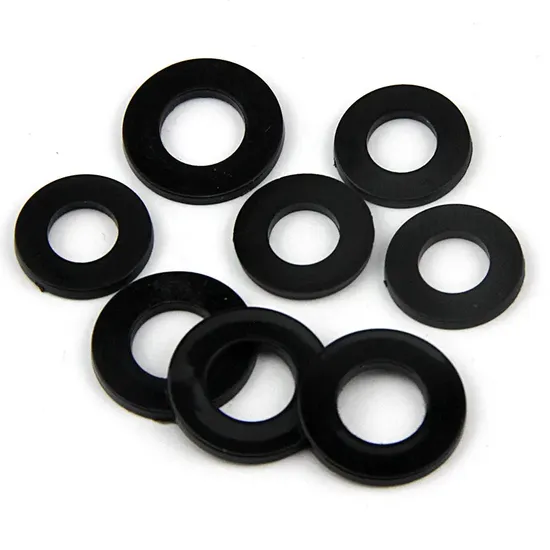
- Dimensions: pipe diameter, gasket ID/OD, width, thickness, bolt spacing and flange angle if applicable.
- Temperature: continuous and peak operating temperature, especially near turbo and aftertreatment components.
- Material requirement: graphite composite, stainless reinforced layer, metal gasket, PTFE or custom high-temperature construction depending on application.
- Inspection: dimensional tolerance, compression check, visual surface standard, leak test or sample fitment confirmation.
Material selection: do not choose by price alone
Low-cost gasket material can look acceptable on a drawing but fail after repeated heat cycles. The right choice depends on the temperature, surface condition and compression design.
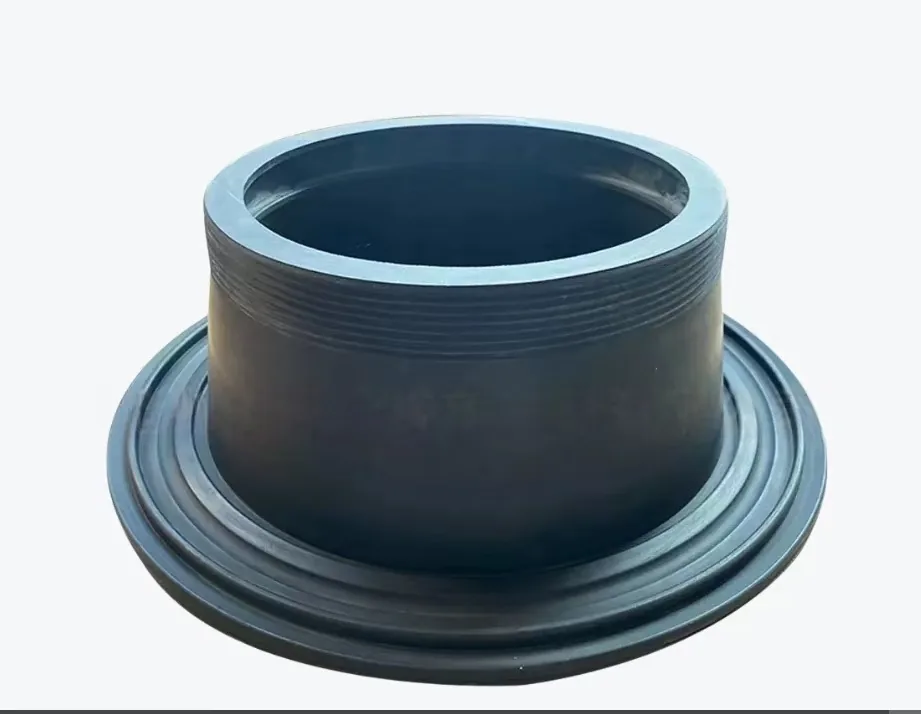
For high-temperature exhaust joints, many buyers consider graphite-based, metal-reinforced or stainless-compatible sealing structures. For lower-temperature pipe damping and industrial sealing areas, rubber or elastomeric components may also be used, but they should not be assumed suitable for hot exhaust gas without temperature confirmation.
What Reddit discussions reveal about buyer intent
The most useful lesson from Reddit is the search intent behind the questions. Mechanics and drivers are rarely asking for abstract gasket theory. They want to know:
- Why is there black soot around the clamp?
- Can tightening the clamp fix it?
- Is the gasket missing, burned or the wrong width?
- Why does a new gasket still leak?
- Should the flange be cleaned, flattened or replaced?
- Does the clamp need to be tapped and retorqued to seat correctly?
A buyer-focused product page or RFQ should answer those questions directly. That is also why this article focuses on gasket fitment and leak prevention rather than listing every possible truck accessory.
Recommended RFQ format
Copy this into an RFQ: We need a truck exhaust gasket for [joint position]. Pipe OD is [size]. Joint type is [flange/V-band/clamp/donut]. Working temperature is [range]. Target material is [material or unknown]. Annual quantity is [quantity]. Attached are drawing, sample photos and flange/clamp photos.
How MCHEN can support exhaust gasket projects
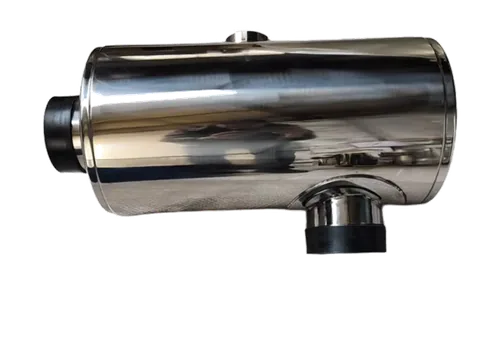
MCHEN can review exhaust gasket drawings, samples and application photos for industrial and vehicle-related sealing parts. The dedicated custom truck exhaust gaskets page explains application types, RFQ inputs and quotation details. For assemblies that also need metal components, MCHEN can support stainless exhaust silencers, pipe fittings, machined parts and related OEM components.
If you are preparing dimensions now, use the truck exhaust gasket measurement guide before submitting the inquiry.
For a fast quotation, send the gasket sample or drawing, installation photos, material request, target temperature, quantity and any test requirement. If the material is uncertain, explain the failure mode and application position first.
FAQ
Why does my exhaust gasket leak even after replacement?
The usual causes are wrong gasket size, dirty mating surfaces, warped flanges, wrong clamp profile, poor pipe alignment or uneven torque. A new gasket cannot fix a joint that does not seat correctly.
Can I solve an exhaust leak by tightening the clamp?
Sometimes, but not always. If the gasket is missing, burned, too narrow, or the clamp profile is wrong, extra tightening can damage parts without sealing the joint.
What is the most important dimension for an exhaust gasket?
Pipe diameter matters, but gasket width, compressed thickness and the sealing land are just as important. These determine whether the gasket actually covers and compresses the leak path.
Can MCHEN manufacture custom truck exhaust gaskets?
Yes. MCHEN can evaluate samples, drawings and application photos, then quote suitable material, tooling and production options for truck exhaust sealing parts.