
Choosing a truck exhaust gasket material is not the same as choosing a normal rubber seal. Exhaust joints see heat, vibration, pressure pulses, surface movement and repeated service cycles. A low unit price can look attractive, but the real cost is the number of leaks, replacements and maintenance callbacks after installation.
This guide helps buyers decide what information to send before requesting a custom truck exhaust gasket quote. It focuses on clamp joints, flange joints, manifold and downpipe areas, aftertreatment connections and related lower-temperature damping parts.
Buyer rule: choose the gasket material after confirming joint type, temperature range, compression design and failure mode. Material alone cannot fix a clamp or flange that does not seat correctly.
Start with the exhaust joint, not the material name
Many RFQs start with a simple request such as "need a rubber exhaust gasket" or "need high temperature gasket." That is not enough to quote accurately. The same truck may use different sealing approaches across the exhaust system.
- Manifold and turbo areas: higher heat, stronger thermal cycling and less tolerance for ordinary elastomers.
- Downpipe and V-band joints: clamp profile, seating angle and gasket width are critical.
- DOC, DPF and SCR connections: aftertreatment joints need stable sealing and careful fitment.
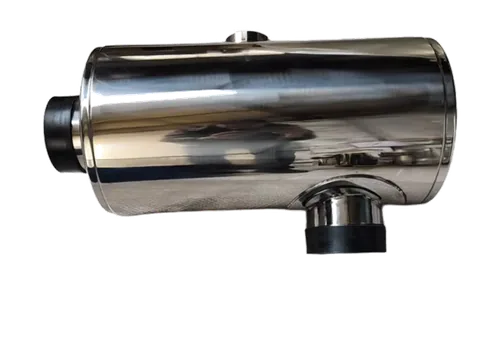
- Muffler and tailpipe joints: temperature may be lower, but vibration and corrosion still matter.
- Pipe support and damping points: rubber or elastomeric parts may be suitable when they are not sealing hot exhaust gas directly.
Common material choices and where they fit
| Material Direction | Best-Fit Use | Buyer Notes |
|---|---|---|
| Graphite composite | High-temperature exhaust sealing where compression and surface conformity matter. | Useful when the joint needs heat resistance and some ability to conform to sealing surfaces. |
| Metal-reinforced gasket | Clamp, flange or aftertreatment areas where strength and heat resistance are both important. | Confirm thickness, seating profile and whether the design needs stainless reinforcement. |
| Stainless or metal gasket | Applications that need high heat tolerance and stable shape under compression. | Surface flatness and flange condition become especially important. |
| PTFE or filled PTFE | Chemical sealing or selected industrial applications outside direct hot exhaust gas zones. | Do not assume PTFE is correct for every exhaust joint; temperature and compression must be checked. |
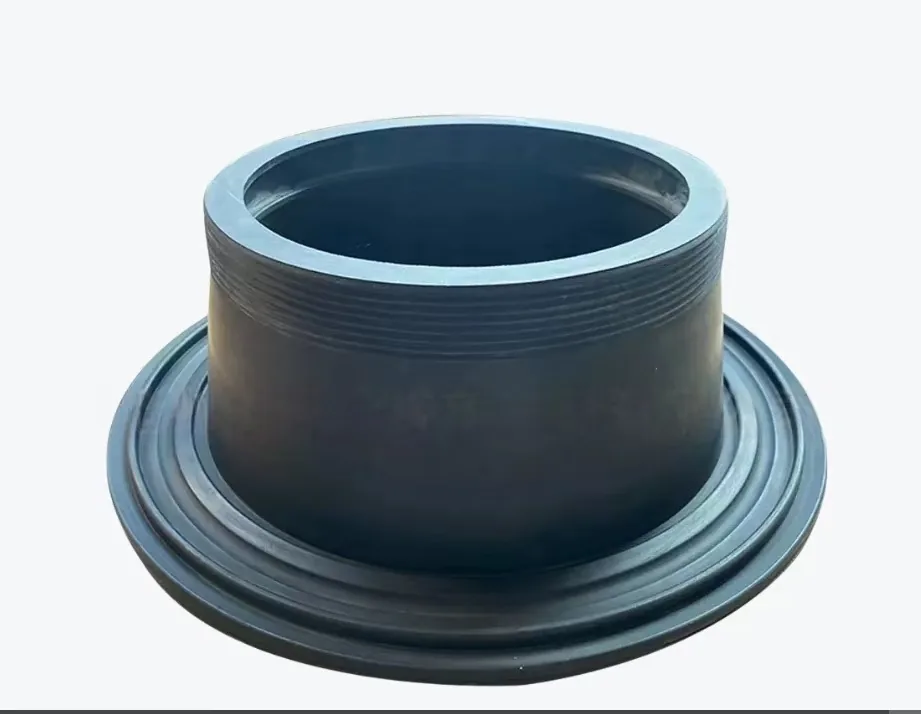
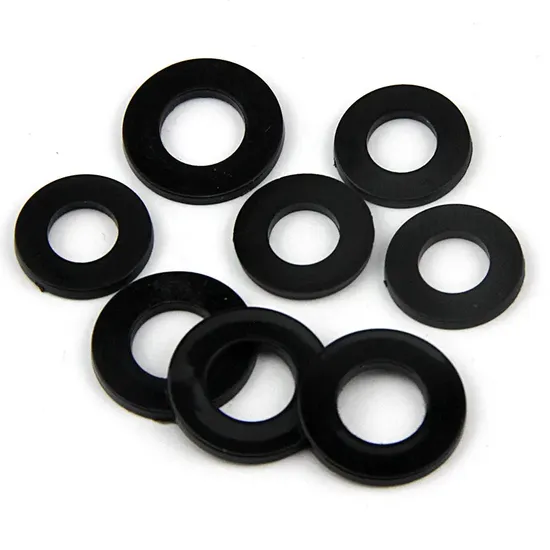
| Rubber or elastomer | Lower-temperature damping, support, pipe pads and non-hot-gas industrial sealing points. | Good for many rubber gasket projects, but hot exhaust gas usually needs a different structure. |
When "cheap" becomes expensive
For distributors and repair suppliers, cost matters. MCHEN can support cost-effective custom gasket production, but the cheapest material is not always the lowest total cost. If a gasket leaks after a few heat cycles, the buyer pays again through warranty pressure, replacement labor and unhappy customers.
The better target is factory-direct value: a material and design that match the joint, produced at a competitive price, with repeatable dimensions and export-ready packing for batch orders.
Match material to failure mode
If an old gasket failed, the failure pattern is useful. Send photos before cleaning the joint. Soot marks, burned edges, uneven compression and clamp witness marks can point to the real cause.
| Failure Symptom | Likely Check | RFQ Detail |
|---|---|---|
| Black soot at clamp | Wrong width, poor clamp seating or pipe misalignment. | Clamp photos, pipe OD, gasket width and seating angle. |
| Burned edge | Material not suitable for temperature or exposed edge. | Application position and continuous/peak temperature. |
| Crushed unevenly | Flange warpage, uneven torque or wrong thickness. | Flange photos, bolt spacing and compressed thickness. |
| Leak after replacement | Old material left behind, dirty mating surface or mismatched clamp profile. | Before and after installation photos. |
| Repeated vibration failure | Joint movement, support issue or wrong gasket structure. | Engine position, support bracket condition and service cycle. |
RFQ checklist for material recommendation
To quote faster, send the technical context together with the size. MCHEN can then recommend whether the project should use a high-temperature gasket structure, metal reinforcement, graphite composite, or a lower-temperature rubber component.
- Joint position: manifold, turbo, downpipe, DOC/DPF, muffler, tailpipe or pipe support.
- Joint type: flange, V-band, clamp, donut, custom groove or damping pad.
- Dimensions: pipe OD/ID, gasket OD/ID, width, thickness, bolt pattern and flange angle.
- Temperature: continuous and peak temperature, or at least the location in the exhaust system.
- Failure mode: soot, burn, noise, broken sample, repeated leak or poor clamp closure.
- Commercial requirement: sample quantity, annual quantity, packing method and target cost level.
How MCHEN keeps price and quality balanced
MCHEN focuses on practical custom production for buyers who need stable quality and competitive pricing. For truck exhaust gasket projects, that means checking the application first, choosing a realistic material direction, then quoting the production route according to quantity and repeat order potential.
For broader sealing and damping parts, see the Industry Rubber Gasket page. For the dedicated product path, review Custom Truck Exhaust Gaskets. If you already have dimensions, use the measurement guide before sending an inquiry.
FAQ
What is the best material for truck exhaust gaskets?
There is no single best material. High-temperature exhaust joints often need graphite composite, metal-reinforced or other heat-resistant gasket structures. The correct choice depends on the joint type, temperature and compression design.
Can ordinary rubber be used for a truck exhaust gasket?
Ordinary rubber should not be assumed suitable for hot exhaust gas sealing. Rubber can be useful for lower-temperature damping, support and industrial sealing points, but direct hot exhaust joints need application review.
How can I reduce gasket cost without hurting quality?
Send a complete RFQ with dimensions, photos, quantity and failure mode. A clear specification helps avoid overbuilding the gasket while still protecting sealing performance.
Can MCHEN quote from a sample instead of a drawing?
Yes. MCHEN can review samples, photos and key dimensions, then request any missing details before quoting tooling and batch production.